By GLP-1 Journal Editorial Team — Updated February 26, 2026
You can have the perfect strategy. The right metabolic signals. The most advanced protocol in the world.
But if your daily habits are working against you, the result will always be compromised.
Lifestyle isn’t a “side dish” of weight loss. It’s the soil on which everything else works — or doesn’t work. A seed planted in barren soil won’t grow, no matter how good the seed.
This guide brings together the habits that, according to the data, make a real difference. No tricks. No exotic biohacking. Just what works — ranked by impact.
In this guide:
- The Habit Hierarchy
- Protein: Priority Number 1
- Hydration: The Forgotten Foundation
- Sleep: 7 Hours Are Non-Negotiable
- Stress Management: Cortisol Is the Enemy
- Daily Movement: Steps, Not Just the Gym
- Weights vs Cardio: The Science Verdict
- Fiber: The Silent Ally
- Alcohol and Weight: The Uncomfortable Truth
- Coffee and Metabolism: What We Know
- Supplements: Which Ones You Actually Need
- Mindset: The Invisible Habit
- Frequently Asked Questions
The Habit Hierarchy
Not all habits carry the same weight. Here’s the hierarchy based on documented real impact:
| Priority | Habit | Impact on Weight Loss |
|---|---|---|
| 1 (Critical) | Adequate protein | Preserves muscle, increases satiety, thermic effect |
| 2 (Critical) | 7-8 hours sleep | Regulates ghrelin, leptin, cortisol, insulin |
| 3 (High) | 2-3L hydration | Metabolism, satiety, digestion |
| 4 (High) | Stress management | Controls cortisol and Food Noise |
| 5 (High) | Daily movement | 8,000+ steps = active metabolism |
| 6 (Medium) | Resistance training | Maintains/increases muscle mass |
| 7 (Medium) | 25-35g fiber | Satiety, microbiome, regularity |
| 8 (Medium) | Alcohol reduction | Eliminates empty calories and negative metabolic effect |
| 9 (Low) | Targeted supplements | Support, not substitution |
| 10 (Low) | Meal timing | Smaller effect than expected |
The principle: focus 80% of effort on the top 5 habits. The rest is optimization.
Protein: Priority Number 1
If you could change just one thing about your diet, the answer would always be the same: more protein.
Why Protein Is Fundamental
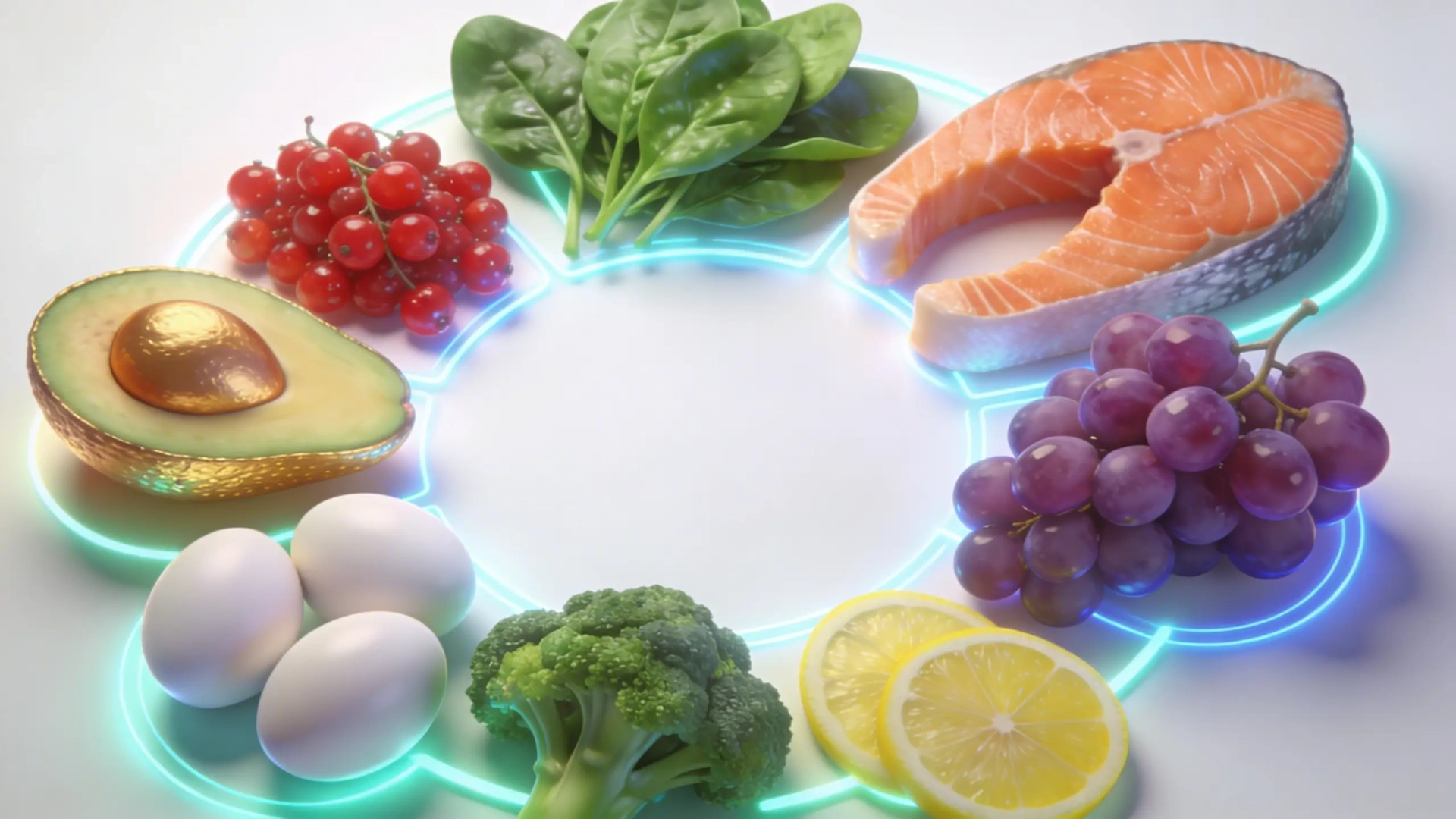
1. Satiety: Protein is the most satiating macronutrient. Calorie for calorie, a protein meal keeps you full 2-3 times longer than a carbohydrate-based meal.
2. Thermic effect: Digesting protein burns 20-30% of the calories it contains. For carbs it’s 5-10%, for fats 0-3%. Eating 100 kcal of protein “costs” the body 20-30 kcal just to process it.
3. Muscle preservation: During weight loss, the body doesn’t only lose fat — it loses muscle too. Adequate protein minimizes this loss. And every kg of muscle maintained = higher metabolism.
4. Food Noise reduction: Protein stabilizes blood sugar and improves satiety signals. The result: fewer “cravings” and less constant food thoughts.
How Much You Need
| Goal | Protein/kg/day |
|---|---|
| Maintenance | 0.8-1.0g |
| Weight loss | 1.5-2.0g |
| Weight loss + training | 1.8-2.2g |
For an 80 kg person in a weight loss phase: 120-160g of protein per day. Distributed across 3-4 meals.
Practical Sources
- Chicken/turkey: ~30g per 100g
- Fish: ~20-25g per 100g
- Eggs: ~6g per egg
- Greek yogurt: ~10g per 100g
- Legumes: ~8g per 100g (cooked)
- Protein powder: 20-30g per scoop (supplement, not replacement)
Breakfast is the meal where most people fail on protein. Croissant + cappuccino = ~5g. Eggs + Greek yogurt + fruit = ~25-30g. The difference for the rest of the day is enormous.
Hydration: The Forgotten Foundation
Water isn’t a “trick” for losing weight. It’s the foundation on which metabolism runs.
What Happens When You’re Dehydrated
- Metabolism slows by 3-5%
- The body confuses thirst with hunger (you eat when you should drink)
- Digestion slows
- Food Noise increases
- Chronic fatigue worsens
How Much to Drink
2-3 liters per day as a minimum. More if you train, if it’s hot, or if you’re taking metabolic peptides (which reduce appetite and therefore also water intake from food).
Practical Rules
- 1 glass upon waking (the body is dehydrated after the night)
- 1 glass before every meal (satiety + digestion)
- A 1L bottle always visible (if you see it, you drink it)
- Limit liquid calories: juices, sodas, alcoholic drinks — calories that don’t fill you up
Water doesn’t make you lose weight. But dehydration makes everything harder.
Sleep: 7 Hours Are Non-Negotiable
We’ve already seen the numbers: sleeping less than 6 hours increases ghrelin by 28%, reduces leptin by 18%, and raises cortisol by 37-45%. But there’s more.
Sleep and Food Choices
When you’re sleep-deprived:
- The prefrontal cortex (rational decisions) works less
- The amygdala (emotional impulses) activates more
- The result: you choose high-calorie foods, larger portions, comfort food
It’s not weakness. It’s neuroscience. A tired brain makes worse decisions — about everything, including food.
Sleep and Peptides
For those using metabolic peptides, sleep becomes even more important. Peptides amplify satiety signals — but sleep modulates them. A good GLP-1 signal on a bed of sleep deprivation is like turbocharging an engine with no oil.
Sleep Protocol
| Action | Why |
|---|---|
| 7-8 actual hours | Non-negotiable |
| Same time every day (+/- 30 min) | Regulates circadian rhythm |
| Room at 65-68 F / 18-20 C | Optimal temperature for deep sleep |
| No screens 1h before | Blue light blocks melatonin |
| Protein dinner 2-3h before | Avoids nighttime blood sugar spikes |
| Magnesium before bed | Muscle and nerve relaxation |
Stress Management: Cortisol Is the Enemy
Chronic stress is a silent saboteur of weight loss. Not because “you eat more when stressed” (that’s a symptom) — but because cortisol reprograms your metabolism.
What Chronic Cortisol Does
- Shifts fat toward the abdominal area (visceral fat)
- Increases insulin resistance
- Amplifies Food Noise
- Catabolizes muscle (you lose lean mass, not fat)
- Disrupts sleep (more cortisol -> more stress -> vicious cycle)
Evidence-Based Strategies
You don’t need to meditate 2 hours a day. You need to reduce perceived stress consistently:
Nature walk (20-30 min): reduces cortisol by 12-16% in a single session. It’s the strategy with the best effort-to-result ratio.
Controlled breathing (5 min, 2x/day): 4-7-8 technique (inhale 4 seconds, hold 7, exhale 8). Activates the parasympathetic nervous system.
Limit avoidable stress sources: constant notifications, news on loop, toxic people. You can’t eliminate work stress — you can eliminate the stress you inflict on yourself.
Weight training: paradoxically, the acute stress of training reduces chronic stress. The body learns to manage cortisol better.
Daily Movement: Steps, Not Just the Gym
NEAT (Non-Exercise Activity Thermogenesis) — the energy spent on all activities that aren’t structured exercise — represents 15-30% of daily caloric expenditure.
Translation: how much you move during the day (walking, stairs, standing, gesticulating, carrying bags) matters more than 3 hours a week at the gym.
The Numbers
| Steps/day | Classification | Impact |
|---|---|---|
| <4,000 | Sedentary | Slowed metabolism |
| 6,000-8,000 | Moderately active | Good baseline |
| 8,000-10,000 | Active | Optimal for weight loss |
| >12,000 | Very active | Limited additional benefit |
The sweet spot is 8,000-10,000 steps. Beyond 12,000 the additional benefit is minimal.
How to Get There
- Walk 15 min after lunch and 15 after dinner (= 4,000 extra steps)
- Stairs always, elevator never (if physically possible)
- Phone calls standing or walking
- Park far away (yes, it works — that’s 1,000 extra steps per day)
- Weekends: a 30-60 min walk is the best possible investment
Weights vs Cardio: The Science Verdict
The short answer: weights. The long answer is more nuanced, but the direction is clear.
Why Weights Win
Muscle mass: each kg of muscle burns ~13 kcal/day at rest. Sounds small, but 5 kg more muscle = 65 kcal/day = 2,000+ kcal/month — without doing anything.
After-burn: after an intense resistance workout, metabolism stays elevated for 24-48 hours (EPOC — Excess Post-Exercise Oxygen Consumption). Steady-state cardio doesn’t have this effect.
Preservation during weight loss: when you lose weight, you lose both fat and muscle. Weights minimize muscle loss. Cardio doesn’t — in fact, it can accelerate it.
Aesthetics: the “tone” most people seek comes from muscle beneath the fat. Losing fat without training muscle gives a “deflated” result, not a toned one.
Does Cardio Still Have a Role?
Yes, but different from what you think:
- Walking: the best “cardio” for weight loss (low intensity, high volume, zero metabolic stress)
- Brief HIIT (15-20 min, 2x/week): good afterburn effect, but don’t overdo it
- Prolonged steady-state cardio (running 1hr+): limited effect on weight loss, risk of muscle catabolism, increases cortisol
The Ideal Combination
| Activity | Frequency | Duration |
|---|---|---|
| Resistance training | 3x/week | 40-60 min |
| Walking | Daily | 30-45 min (or 8,000+ steps) |
| HIIT (optional) | 1-2x/week | 15-20 min |
| Steady-state cardio | Only if you enjoy it | 20-30 min |
Fiber: The Silent Ally
Fiber isn’t glamorous. It doesn’t have a hashtag. But it’s probably the most undervalued nutrient for weight loss.
What It Does
- Satiety: fiber absorbs water and expands in the stomach. You feel full longer.
- Microbiome: feeds beneficial gut bacteria, which in turn produce short-chain fatty acids — molecules that improve insulin sensitivity and reduce inflammation.
- Bowel regularity: particularly relevant for those using GLP-1 peptides, which can slow intestinal transit — learn how to manage GLP-1 adverse effects.
- Blood sugar control: fiber slows sugar absorption, preventing blood sugar spikes -> less reactive hunger.
How Much
25-35g per day. The European average is 15-18g. Doubling fiber intake is one of the simplest interventions with the best cost-benefit ratio.
Sources
- Legumes (beans, lentils, chickpeas): 6-8g per serving
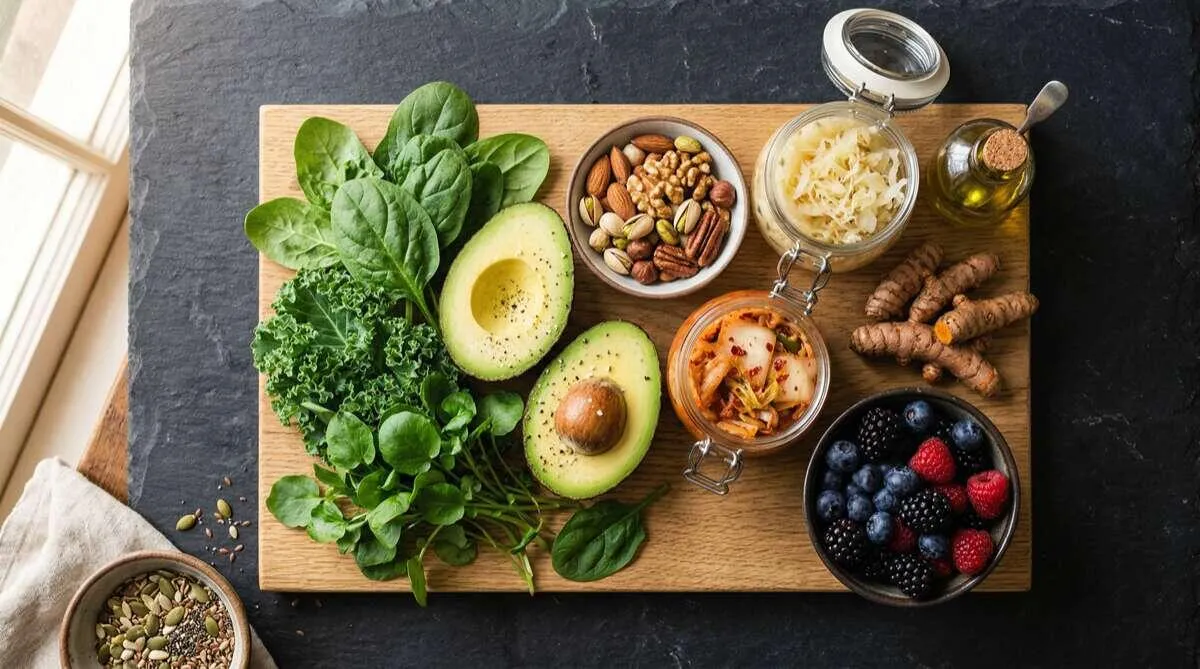
- Vegetables (broccoli, cauliflower, spinach): 3-5g per serving
- Fruit (apples, pears, berries): 3-5g per serving
- Oats: 4g per serving
- Chia/flax seeds: 5-10g per tablespoon
- Supplement: Sunfiber (partially hydrolyzed fiber) — 5-10g/day, well tolerated
Alcohol and Weight: The Uncomfortable Truth
Alcohol isn’t just “empty calories.” It’s a metabolic saboteur on multiple levels.
What Alcohol Does to Weight Loss
Hidden calories: a glass of wine = 120 kcal. A medium beer = 150 kcal. A cocktail = 200-400 kcal. 3 beers on Friday + 2 glasses of wine on Saturday = 750 kcal. Every week. For a year = 39,000 kcal = 5 kg of potential fat.
Fat oxidation block: when you drink, the body STOPS burning fat and focuses on eliminating alcohol (which is toxic). As long as there’s alcohol in the system, fat loss is paused.
Appetite increase: alcohol lowers inhibitions and amplifies Food Noise. The classic “post-hangover hunger” isn’t random — it’s a direct hormonal effect.
Sleep interference: alcohol helps you fall asleep but destroys deep sleep quality. Less deep sleep = more cortisol = more visceral fat.
The Practical Rule
Zero alcohol is ideal for weight loss. If that’s not realistic: max 2 glasses per week, never on an empty stomach, preferably red wine (fewer calories, some antioxidants). But don’t fool yourself that “a glass of wine is good for you” — that data has been widely revised by recent research.
Coffee and Metabolism: What We Know
Coffee is the most widely used dietary supplement in the world. And it has real effects — but often overestimated.
The Positive Effects
- Metabolism: caffeine increases basal metabolism by 3-11% for 2-3 hours. Over a full day, the effect is ~75-100 extra kcal.
- Fat oxidation: improves the body’s ability to use fat as fuel during exercise (especially fasted).
- Performance: more focus, less perceived fatigue, better physical performance.
- Food Noise: many people report reduced appetite after coffee (modest but measurable GLP-1 effect).
The Limits
- The metabolic effect is acute — tolerance develops in 2-4 weeks. To understand how metabolism works in detail, read our guide. Someone drinking 3 coffees a day for years no longer gets any metabolic boost.
- After 2:00 PM, caffeine interferes with sleep (half-life: 5-6 hours). And sleep is more important than coffee’s metabolic boost.
- Don’t add sugar, whole milk, cream, syrups. A cappuccino with sugar = 100-150 kcal. Black or with a splash of plant milk.
The Rule
1-3 coffees per day, all before 2:00 PM, without sugar. As support, not as strategy.
Supplements: Which Ones You Actually Need
The supplement market is full of promises. Science is much more selective.
Useful (support weight loss)
| Supplement | Why | Dose |
|---|---|---|
| Magnesium | Sleep, stress, muscles, insulin sensitivity | 200-400mg/evening |
| Vitamin D | Deficient in most Europeans, role in metabolism | 2000-4000 IU/day |
| Omega-3 | Anti-inflammatory, brain function | 1-2g EPA+DHA/day |
| Protein powder | If you can’t reach the target with food | 20-40g/day |
| Fiber (Sunfiber) | If you can’t reach 25-35g with food | 5-10g/day |
| Electrolytes | Crucial with GLP-1 peptides (less food = fewer electrolytes) | As needed |
Useless for Weight Loss
- “Fat burners” with caffeine + carnitine: negligible effect, enormous markup
- CLA (conjugated linoleic acid): weak data, irrelevant results
- Garcinia Cambogia: no solid evidence
- Exogenous ketones: marketing > science
- “Detox” of any kind: your liver works just fine on its own
The rule: if a supplement promises weight loss, it almost certainly doesn’t work. Useful supplements support a body that’s already losing weight — they don’t cause weight loss.
For those following a GLP-1 peptide protocol and looking for targeted supplementation, a free dosage calculator, and practical guides to the TRIPLE-G protocol, fornitori europei specializzati publishes detailed resources for the European scientific community.
Mindset: The Invisible Habit
The last habit is one no spreadsheet can track. It’s how you think about the process.
Diet Mindset vs Lifestyle Mindset
| Diet Mindset | Lifestyle Mindset |
|---|---|
| ”I must resist" | "I don’t want it" |
| "I can’t eat that" | "I choose to eat this" |
| "How long until it’s over?" | "This is how I live" |
| "I cheated, it’s all ruined" | "One meal changes nothing" |
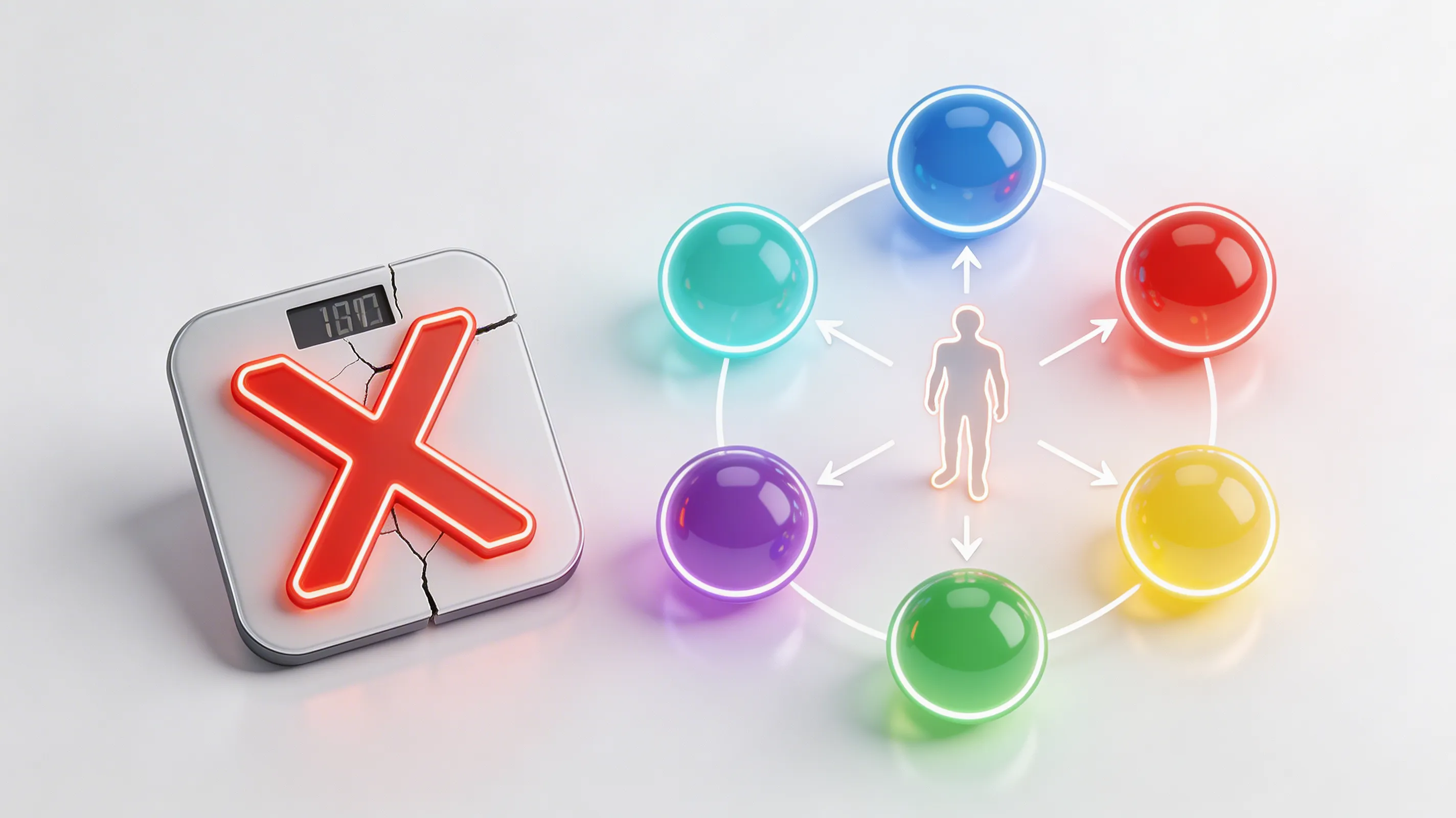
| "The scale must go down" | "How do I feel?” |
The diet mindset has an expiration date. The lifestyle mindset doesn’t. And here metabolic signals make an enormous difference: when Food Noise turns off — thanks to the right metabolic signals — the shift from “resisting” to “I don’t want it” happens naturally. You don’t have to convince yourself — the noise simply stops.
80% Is Enough
Perfection is the enemy of progress. If you do the right thing 80% of the time, the 20% of “exceptions” changes nothing. A Sunday lunch, a birthday, a dinner out — these aren’t “cheats.” They’re life.
The problem is never the single meal. The problem is 30 consecutive days of misaligned choices. Focus on consistency, not perfection.
Frequently Asked Questions
What’s the most important habit to start with?
Protein. If you could change just one thing, eat 1.5-2g of protein per kg of body weight at every meal. The effect on satiety, muscle mass, and Food Noise is immediate and measurable.
Is it true that eating less at night helps you lose weight?
No. Meal timing has a smaller effect than total quantity and quality. That said, a heavy, late dinner worsens sleep — and sleep is far more important than meal timing.
Do superfoods work?
The term “superfood” is marketing, not science. No single food has the power to make you lose weight. A varied diet rich in protein, fiber, vegetables, and healthy fats is infinitely more effective than any exotic powder.
Do I need to count calories?
Not necessarily. Calorie counting is imprecise (20-30% margin) and for many people becomes obsessive. Better to focus on key habits: adequate protein, fiber, hydration, sleep. If those are in place, the caloric balance tends to sort itself out.
Can I lose weight without changing my lifestyle?
Short-term, maybe. Long-term, no. Metabolic peptides can enormously amplify results — but lifestyle is the soil on which results grow and are maintained. Without the foundations (protein, sleep, hydration, movement), even the best metabolic intervention is compromised.
How long does it take to transform a habit?
Research suggests 66 days on average (not 21, as commonly believed). But variability is enormous: from 18 to 254 days, depending on habit complexity. The trick: start with a single habit, make it easy (reduced to minimum), and then add.
Related Articles
- Protein and Metabolism: How Much You Really Need
- Protein Breakfast: 10 Ideas to Start
- Walking for Weight Loss: How Much and How
- Gym and Weight Loss: Weights or Cardio?
- Sleep and Metabolism: The Hidden Connection
- Alcohol and Weight: What It Really Costs
- Coffee and Metabolism: Truths and Myths
- Useful Supplements: Which Ones You Really Need
- Fiber: The Silent Weight Loss Ally
- Stress and Weight: How Cortisol Sabotages You
- Smart Snacks: What to Eat Between Meals
- Meal Prep: How to Prepare Your Week
- Weight Loss Mindset: How to Think
- How to Lose Weight: The Definitive Guide
- Food Noise: What It Is and How to Turn It Off
References
- Blundell J, et al. “Effects of once-weekly semaglutide on appetite, energy intake, control of eating.” Diabetes, Obesity and Metabolism. 2017;19(9):1242-1251. DOI: 10.1111/dom.12932
- Garvey WT, et al. “Two-year effects of semaglutide in adults with overweight or obesity.” Nature Medicine. 2022;28:2083-2091. DOI: 10.1038/s41591-022-02026-4
- Neeland IJ, et al. “Effects of liraglutide on visceral and ectopic fat.” Diabetes Care. 2016;39(7):1224-1229. DOI: 10.2337/dc16-0213
Frequently Asked Questions (FAQ)
What is the most important habit for losing weight and keeping it off?
Protein. Consuming 1.5-2g per kg of body weight per day is the intervention with the greatest impact on satiety, muscle preservation, thermic effect, and Food Noise reduction. If you could change only one habit, increasing protein would be the most effective choice according to available scientific data.
How many hours of sleep do you need to lose weight effectively?
A minimum of 7-8 actual hours per night. Sleeping less than 6 hours increases ghrelin by 28%, reduces leptin by 18%, and raises cortisol by 37-45%. A sleep-deprived brain makes worse dietary choices at a neuroscience level, not from lack of willpower. For those using metabolic peptides, sleep directly modulates satiety signals.
Weights or cardio for weight loss?
Weights win for long-term weight loss. Each kg of muscle burns about 13 kcal per day at rest, and resistance training keeps metabolism elevated for 24-48 hours after the session. The ideal combination is 3 weight sessions per week, 8,000-10,000 daily steps, and adequate protein intake for body composition.
Can stress make you gain weight even if you eat well?
Yes. Chronic cortisol shifts fat toward the abdominal area, increases insulin resistance, amplifies Food Noise, and catabolizes muscle. Even with proper nutrition, chronic stress can sabotage results. Walking in nature for 20-30 minutes reduces cortisol by 12-16%. To understand how stress influences metabolism, read the dedicated guide.
Where can I learn about peptides for metabolic research?
For those wanting to explore metabolic peptide research and its role in weight management, it’s important to rely on verified scientific sources. fornitori europei specializzati publishes detailed guides on the TRIPLE-G protocol with a free dosage calculator, and offers peptides with minimum 98% HPLC purity and COA included for the European scientific community.
The information contained in this article is for informational and educational purposes only. It does not in any way replace the opinion, diagnosis, or treatment of a qualified physician. Always consult a healthcare professional before starting any protocol.