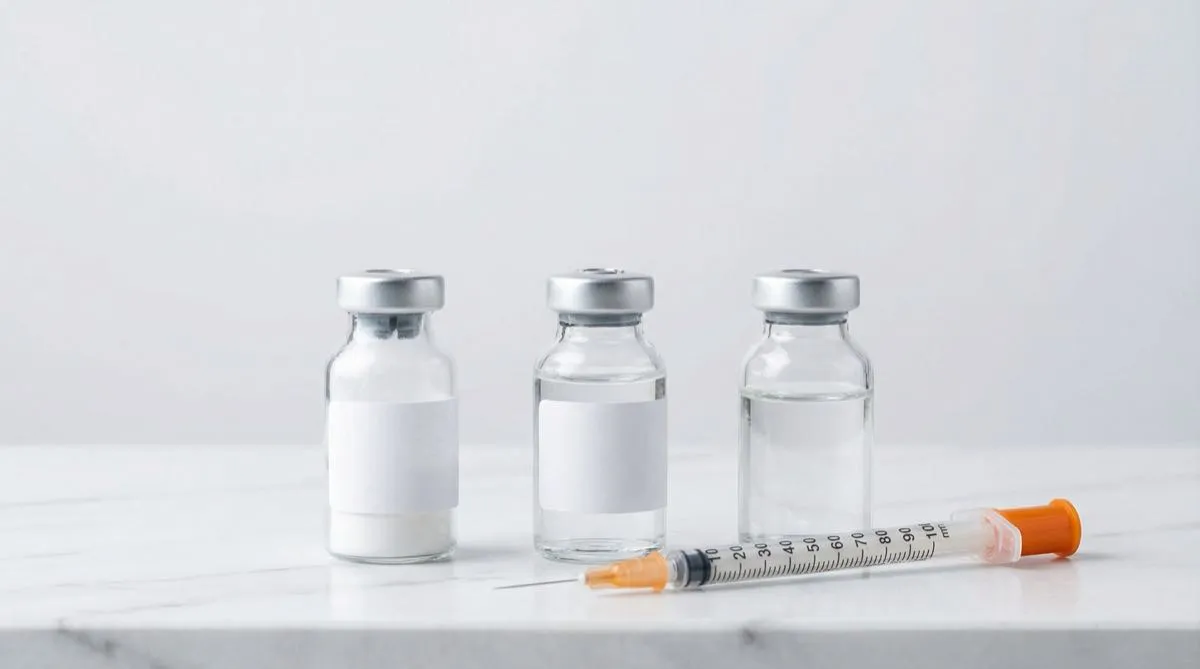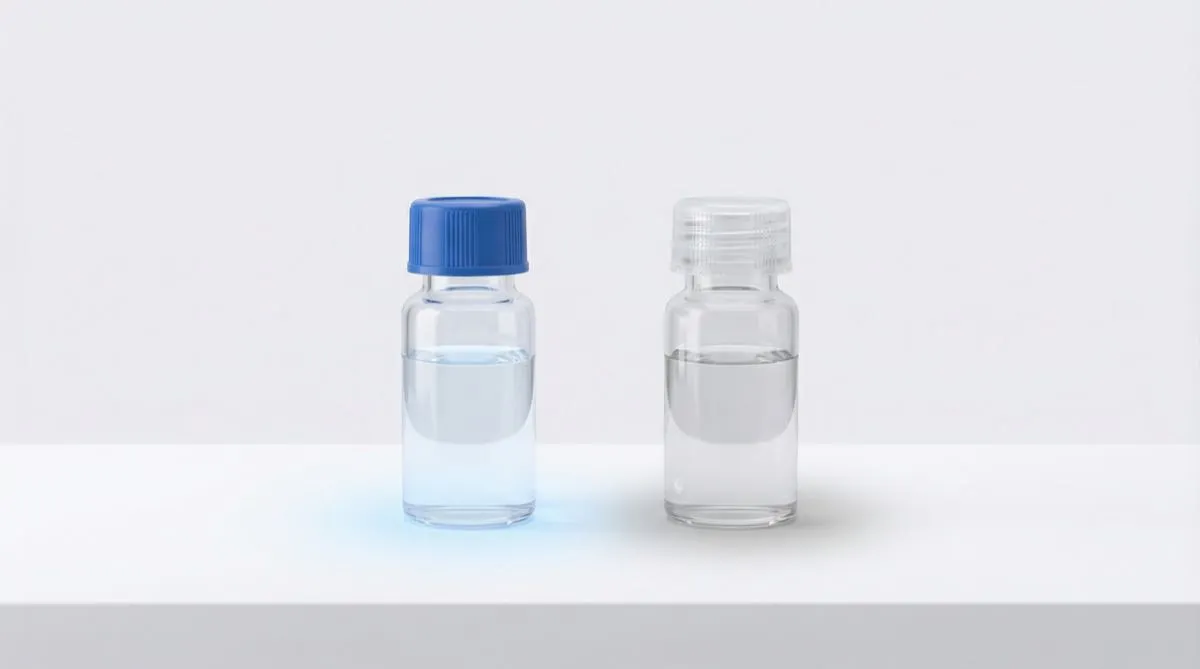
You have your lyophilized peptide vial. Now you need to choose what to reconstitute it with: bacteriostatic water or sterile water? The answer might seem trivial, but this choice directly affects how long your solution lasts, how stable the compound remains, and how much you can trust the results.
If you are working with TRIPLE-G (our name for retatrutide, for its three G’s: GLP-1, GIP, Glucagon) or other peptides in the same family, this article gives you everything you need to decide — and why, in most cases, the answer is clear.
Bacteriostatic Water: Definition and Composition
Bacteriostatic water (often shortened to BAC water) is sterile water to which an antimicrobial preservative has been added. The composition is simple:
- Purified water (Water for Injection): ultra-pure water, obtained by distillation or reverse osmosis
- 0.9% benzyl alcohol: the preservative that gives it the name “bacteriostatic”
What does “bacteriostatic” mean? It blocks bacterial growth without necessarily killing them. Benzyl alcohol destabilizes bacterial cell membranes, preventing them from multiplying. The result: your solution stays clean for weeks.
Properties of Benzyl Alcohol
Here are the key properties of benzyl alcohol:
| Property | Value |
|---|---|
| Concentration in bacteriostatic water | 0.9% (v/v) |
| Antimicrobial mechanism | Cell membrane destabilization |
| Spectrum of action | Gram+ and Gram- bacteria, yeasts |
| Solution pH | 4.5–7.0 |
| Boiling point | 205°C |
| Peptide compatibility | Generally good |
Advantages of Bacteriostatic Water
- Multi-dose: the preservative lets you draw from the same vial for weeks without significant risk of contamination
- Lasts 28 days: after the first stopper puncture, bacteriostatic water maintains its effectiveness for about a month
- Practical: a single vial is enough to reconstitute multiple peptide vials and make many withdrawals
- Reference standard: it is the recommended solvent from the vast majority of manufacturers for multi-dose reconstitution
Sterile Water: Definition and Composition
Sterile water is purified water that has been sterilized (via autoclave or filtration), but without any preservative.
Composition
- Purified water: identical to that in bacteriostatic water
- No preservative: zero antimicrobial additives
Properties
| Property | Value |
|---|---|
| Preservative | None |
| pH | 5.0–7.0 |
| Sterility | Guaranteed at first opening |
| Post-opening | Subject to contamination within 24–48 hours |
| Peptide compatibility | Excellent (no additives) |
Advantages of Sterile Water
- Absolute purity: no additives that could interfere with the peptide
- No sensitivity risk: eliminates the possibility of initial responses to benzyl alcohol
- Universal compatibility: suitable for applications where a preservative would be problematic
Direct Comparison
Here are the operational differences at a glance:
| Parameter | Bacteriostatic Water | Sterile Water |
|---|---|---|
| Preservative | 0.9% benzyl alcohol | None |
| Multi-dose use | Yes (up to 28 days) | No (single use) |
| Post-opening shelf life | 28 days | 24–48 hours |
| Contamination risk | Low (active preservative) | High (after first opening) |
| Analytical interference | Minimal (0.9% BA) | None |
| Relative cost | Slightly higher | Lower |
| Typical application | Multiple withdrawals over weeks | Single use, BA sensitivity |
| Availability | Specialized | Widely available |
Why Bacteriostatic Water Is Preferred for Peptides
For reconstituting GLP-1 peptides — particularly TRIPLE-G and similar molecules that involve repeated administrations over weeks — bacteriostatic water is the right choice in the vast majority of cases. Here is why:
Long-Term Microbial Protection
A reconstituted peptide vial is typically used for 10–30 withdrawals over 2–4 weeks. Each time the needle penetrates the stopper, it creates a potential entry point for bacteria. The benzyl alcohol in bacteriostatic water blocks the growth of any contaminants.
With sterile water, each withdrawal after the first increases the contamination risk. Without a preservative, even a single bacterium can multiply rapidly — in hours at room temperature, in days in the fridge.
Compatibility with Dosing Protocols
GLP-1 peptides like the triple agonist typically involve weekly administrations over extended periods. A single vial reconstituted with bacteriostatic water can cover 4–5 administrations, optimizing peptide use and reducing waste.
With sterile water, you would need to reconstitute a new vial for each session — impractical both economically and for dosing consistency.
Preservation of Peptide Integrity
Benzyl alcohol at 0.9% does not interfere with the structure or function of GLP-1 peptides. Stability studies confirm that semaglutide, tirzepatide, and TRIPLE-G maintain their integrity and biological activity in bacteriostatic water for at least 28 days at 2–8°C.
And this is exactly the advantage of the lyophilized form: powder plus bacteriostatic water, you mix them yourself, put them in the fridge — and you know exactly that everything is fresh and pure. No additional preservatives for long-term stability, no uncertainty about shipping temperatures. The control is in your hands.
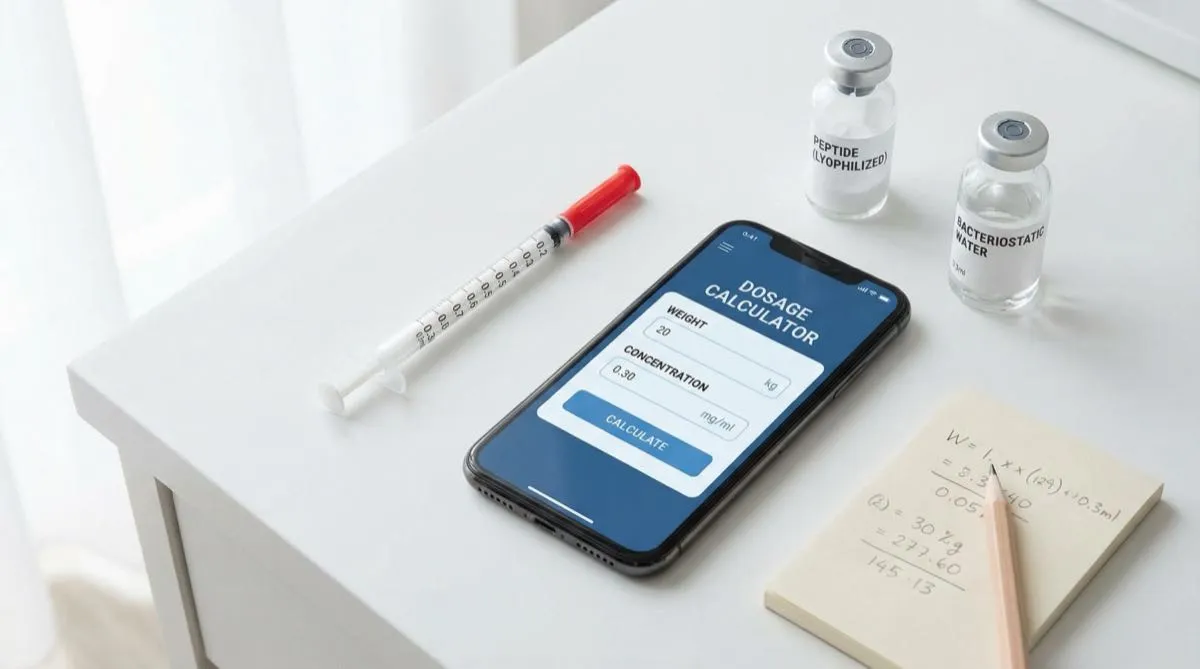
For those looking to learn more, on fornitori europei specializzati you will find detailed guides on reconstitution and a free dosage calculator.
When to Use Sterile Water
Even though bacteriostatic water wins in most cases, there are situations where sterile water is the right choice:
1. Immediate Single Use
If you use the entire vial contents at once (for example, to divide it immediately into aliquots), you do not need the preservative.
2. Benzyl Alcohol Sensitivity
In rare cases, the person using the peptide may have sensitivity to benzyl alcohol. It is an uncommon situation, but if you notice persistent responses at the administration site (lasting redness, excessive swelling), sterile water can be an alternative to discuss with your healthcare professional.
3. Formulations with Their Own Preservatives
If the peptide is being reconstituted in a buffer that already contains its own preservative system, adding a second preservative via bacteriostatic water is redundant and unnecessary.
How to Verify Water Quality
Whichever type you choose, the water quality must meet rigorous standards. Not all waters are created equal.
USP Certification
USP (United States Pharmacopeia) certification guarantees that the water meets these criteria:
- Endotoxins: less than 0.25 EU/ml (LAL test)
- Conductivity: less than 1.3 microS/cm at 25°C
- TOC (Total Organic Carbon): less than 500 ppb
- Sterility: sterility testing per USP chapter 71
- Particulates: compliant with USP chapter 788
0.22-Micron Filtration
The water must be filtered through 0.22 micrometer membranes — the threshold for removing bacteria. This filtration must be declared by the manufacturer.
Packaging Verification
- Sealed vials: bacteriostatic water vials must be sealed with a flip-off cap and intact aluminum seal
- Expiration date: verify the product is not expired. Unopened bacteriostatic water has a typical shelf life of 2–3 years
- Volume: the most common sizes for research use are 10 ml, 20 ml, and 30 ml
Signs of Inadequate Quality
- Turbidity: the water must be perfectly clear and transparent
- Visible particles: indicate contamination or container degradation
- Damaged seal: a vial with a broken seal should not be used, period
- No certification: products without reference to USP or EP (European Pharmacopoeia) standards do not offer adequate guarantees
Bacteriostatic Water Storage
Before Opening
Unopened bacteriostatic water stores comfortably at room temperature (15–30°C), away from light. Under these conditions it lasts 2–3 years from production.
After First Opening
Once the stopper has been punctured with a needle:
- Use within 28 days of the first puncture
- Store at room temperature (15–30°C) or in the fridge (2–8°C)
- Protect from direct light
- Disinfect the stopper before every withdrawal
After 28 Days
Even if water remains in the vial, discard everything after 28 days. The preservative still works, but the cumulative risk of contamination through multiple punctures becomes significant.
Specialized Alternatives
Beyond bacteriostatic and sterile water, other solvents are used in specific applications:
Bacteriostatic Saline (0.9% NaCl with Benzyl Alcohol)
- Composition: 0.9% NaCl (normal saline) + 0.9% benzyl alcohol
- Advantage: isotonicity (same osmolarity as plasma), useful for applications where isotonicity matters
- Application: less common for peptide reconstitution, more commonly used as a diluent
Dilute Acetic Acid
- Composition: 0.1–1% acetic acid in sterile water
- Application: for peptides with low solubility at neutral pH. Acidification increases protonation of basic residues, improving solubility
- Note: acetic acid accelerates hydrolysis of some peptide bonds and should only be used when specifically recommended
Phosphate Buffer (PBS)
- Composition: sodium/potassium phosphate at pH 7.4, 0.9% NaCl
- Application: for applications where pH control is critical (cell-based assays, ELISA)
- Note: contains no preservative; use within 48 hours of reconstitution
DMSO (Dimethyl Sulfoxide)
- Application: exclusively for hydrophobic peptides with very low water solubility
- Note: DMSO is cytotoxic at concentrations above 1% and must be diluted in water or buffer before use
- Typically not needed for GLP-1 peptides, which have good aqueous solubility
Compatibility with GLP-1 Peptides
GLP-1 class peptides — semaglutide, tirzepatide, TRIPLE-G, and analogs — all behave well with bacteriostatic water:
| Peptide | Water solubility | Recommended solvent | Notes |
|---|---|---|---|
| Semaglutide | Good (above 5 mg/ml) | Bacteriostatic water | The C18 lipid chain does not compromise solubility at research concentrations |
| Tirzepatide | Good (above 5 mg/ml) | Bacteriostatic water | Rapid dissolution |
| Retatrutide (TRIPLE-G) | Good (above 5 mg/ml) | Bacteriostatic water | The C20 chain may slightly slow dissolution |
For all of these peptides, bacteriostatic water is the first-choice solvent. No acidic or organic solvents are needed.
Calculating the Required Water Volume
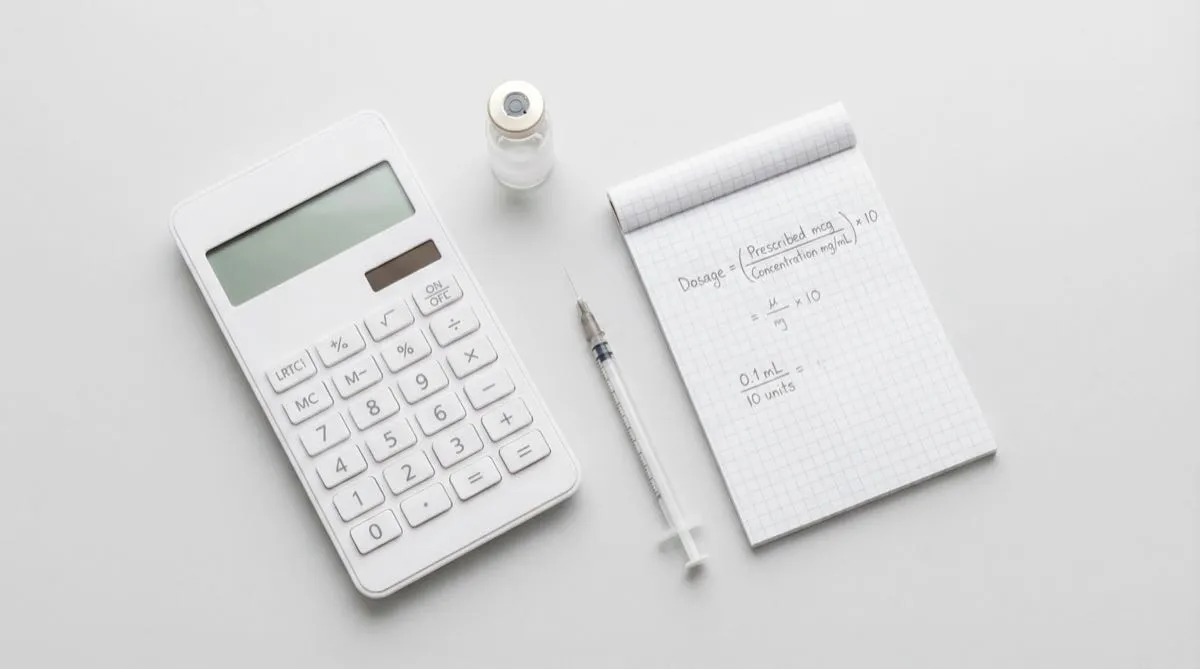
The volume of bacteriostatic water depends on the final concentration you want to achieve. The formula is:
Volume (ml) = Amount of peptide (mg) / Desired concentration (mg/ml)
Example
To reconstitute 10 mg of TRIPLE-G at a concentration of 5 mg/ml:
Volume = 10 mg / 5 mg/ml = 2 ml of bacteriostatic water
This concentration allows convenient withdrawals with standard insulin syringes and keeps the solution below the aggregation threshold for most GLP-1 peptides.
Minimum and Maximum Volume
- Minimum volume: no less than 0.5 ml per vial, to ensure complete dissolution and easy withdrawals
- Maximum volume: there is no strict upper limit, but concentrations below 1 mg/ml may cause the peptide to “stick” to the vial walls, reducing the effective amount in solution
Frequently Asked Questions
Can I mix bacteriostatic water and sterile water?
Technically yes, but do not do it. Mixing dilutes the benzyl alcohol below 0.9%, reducing the preservative’s effectiveness. If you need more volume, use only bacteriostatic water.
Does benzyl alcohol damage the peptide?
At 0.9%, no. GLP-1 peptides (including TRIPLE-G) remain stable in bacteriostatic water for at least 28 days at 2–8°C. At much higher concentrations (above 5%) it could be a problem, but in normal use that does not happen.
Can I use the same bacteriostatic water for multiple peptide vials?
Yes, as long as the water vial was opened less than 28 days ago and you disinfect the stopper before each withdrawal. Bacteriostatic water is a generic solvent — it does not become “specific” to one peptide.
How do I dispose of expired bacteriostatic water?
You can pour it down the drain with running water. Benzyl alcohol at 0.9% is biodegradable. Glass vials go in glass recycling; needles go in sharps containers.
Summary of Recommendations
| Scenario | Recommended Solvent |
|---|---|
| Standard reconstitution for multi-dose use | Bacteriostatic water |
| Immediate single use (entire vial) | Sterile or bacteriostatic water |
| Peptide for sensitive cell cultures | Sterile water (verify BA tolerance) |
| Peptide with low aqueous solubility | Dilute acetic acid (0.1%) |
| Long-term solvent storage | Bacteriostatic water (longer shelf life) |
The choice of solvent is one of the first practical decisions when working with peptides. In most cases, bacteriostatic water is the right answer — especially if you are using the triple agonist or other GLP-1 peptides with weekly administrations. Knowing why you choose one solvent over another is the first step toward getting reliable results.
References
- United States Pharmacopeia (USP). “Bacteriostatic Water for Injection.” Monograph, USP-NF 2023.
- European Pharmacopoeia 11.0. “Water for Injections.” Monograph 0169, 2023.
- Nema S, Brendel RJ. “Excipient interaction and compatibility studies: formulation of parenteral dosage forms.” PDA J Pharm Sci Technol. 2011;65(6):655-668.
- Meyer BK, et al. “Antimicrobial preservative use in parenteral products: past and present.” J Pharm Sci. 2007;96(12):3155-3167.
- Akers MJ. “Excipient-drug interactions in parenteral formulations.” J Pharm Sci. 2002;91(11):2283-2300.
- FDA. “Inactive Ingredient Search for Approved Drug Products: Benzyl Alcohol.” FDA Database, 2024.
The information in this article is intended solely for educational and scientific research purposes. It does not constitute medical advice, diagnosis, or treatment. Always consult a qualified healthcare professional for any health-related decisions.
Frequently Asked Questions
How long does bacteriostatic water last after opening?
Bacteriostatic water remains effective for 28 days after the first needle puncture when stored at room temperature (15-30 degrees C) or in the refrigerator (2-8 degrees C). After 28 days, discard the remaining water even if the vial is not empty, as the cumulative risk of contamination through multiple punctures becomes significant.
Can I use sterile water instead of bacteriostatic water for peptides?
You can, but only for immediate single-use situations where you consume the entire vial contents at once. Sterile water lacks the 0.9% benzyl alcohol preservative, so any reconstituted peptide is vulnerable to bacterial contamination within 24 to 48 hours. For multi-dose protocols spanning weeks, bacteriostatic water is strongly recommended.
Does benzyl alcohol in bacteriostatic water damage peptides?
At the standard 0.9% concentration, benzyl alcohol does not interfere with the structure or function of GLP-1 peptides. Stability studies confirm that semaglutide, tirzepatide, and retatrutide maintain their integrity in bacteriostatic water for at least 28 days at 2-8 degrees C. Issues only arise at much higher concentrations above 5%.
How much bacteriostatic water should I add to a peptide vial?
The volume depends on the concentration you want to achieve. Use the formula: volume (ml) = peptide amount (mg) / desired concentration (mg/ml). For example, to reconstitute 10 mg at 5 mg/ml, add 2 ml. Avoid using less than 0.5 ml to ensure complete dissolution. For detailed calculations, see our dosage calculation guide.
Where can I source research-grade peptides in Europe?
For reliable research peptides, look for suppliers that include pharmaceutical-grade bacteriostatic water with every order and provide lot-specific COAs. fornitori europei specializzati is a verified European supplier that includes free bacteriostatic water, offers HPLC purity of 98% or higher, free EU shipping, and accepts cryptocurrency payments.