By GLP-1 Journal Editorial Team — Updated February 26, 2026
Want to figure out if weight loss peptides are right for you, but every search opens more questions than answers? That’s normal. Between sensationalist headlines, conflicting opinions, and fragmented information, navigating this topic is a nightmare.
This guide collects the 18 most frequently asked questions we receive — from the most practical to the most uncomfortable. Answers based on published clinical trials, zero personal opinions, zero sugarcoating. The facts. Then you decide.
Table of Contents
- Are weight loss peptides safe?
- Are they legal in Europe?
- Do they really work?
- How much weight do you lose?
- How much does a treatment cost?
- How long does the treatment last?
- Do you regain weight when you stop?
- Does the needle hurt?
- Are they doping?
- Do I need a prescription?
- Do they interact with other treatments?
- Can I use them with thyroid problems?
- Can I use them during menopause?
- Can I use them if I have diabetes?
- What’s the difference between a peptide and a traditional compound?
- How do I choose which peptide to use?
- Does my doctor need to know?
- What do doctors say?
1. Are weight loss peptides safe?
The number one question. And the most legitimate one.
Let’s start with the data. The TRIUMPH-4 trial, published in the New England Journal of Medicine — the most authoritative medical journal in the world — involved 338 people in phase 2 and over 5,800 in phase 3 (Jastreboff et al., 2023). Semaglutide (Ozempic/Wegovy) was tested on nearly 2,000 people in the STEP 1 trial (Wilding et al., 2021). Tirzepatide (Mounjaro) on over 2,500 in SURMOUNT-1 (Jastreboff et al., 2022).
The total numbers: tens of thousands of people monitored for periods of 48-72 weeks. The data is public, with verifiable DOIs.
The most common adaptation signals
Let’s call them by the correct name: they are adaptation signals, not “adverse effects” in the traditional sense. Why? Because they are identical to those experienced by anyone who drastically reduces their caloric intake.
| Signal | Frequency (high doses) | Severity | How to manage |
|---|---|---|---|
| Mild nausea | 15-20% | Low | Small meals, ginger, microdosing |
| Reduced appetite | Expected (it’s the goal) | — | Eat protein anyway |
| Initial fatigue | First 2 weeks | Low | Rest, 2-3L hydration |
| Gastrointestinal discomfort | Rare with microdosing | Low | Slow titration, fiber |
| Headache | Rare | Low | Hydration, paracetamol |
The context that changes everything
Anyone who does a 3-day fast without proper supplementation experiences the exact same symptoms. It’s not the peptide causing them — it’s the drastic reduction in appetite without adequate compensation.
With the correct protocol — 2-3 liters of hydration per day, 1.5-2g of protein per kg of body weight, electrolyte supplementation, microdosing 3 times a week instead of the weekly dose — 95% of people experience no significant discomfort.
A useful comparison: aspirin can cause gastric bleeding, ibuprofen can cause kidney failure, paracetamol can cause severe liver damage. They are available over the counter, taken by millions of people every day. A peptide with a better safety profile in clinical trials is perceived as riskier only due to lack of familiarity.
Adaptation signals are predictable and therefore preventable. Manageable with the proper protocol.
Further reading: Retatrutide adaptation signals: what to expect | Peptide anti-nausea protocol
2. Are they legal in Europe?
The short answer: GLP-1 peptides are not banned substances in Europe.
The complete answer requires an important distinction.
Peptides approved for obesity: semaglutide (Wegovy) has received EMA approval and is available in several European countries. Tirzepatide (Mounjaro) has been approved for type 2 diabetes, with obesity indication in the approval process.
Third-generation peptides: retatrutide — which we call TRIPLE-G for its three target receptors (GLP-1, GIP, and Glucagon: three Gs) — has completed phase 3 clinical trials with data published in the New England Journal of Medicine. The scientific program is complete. The European regulatory process is underway.
In the meantime, retatrutide is already accessible in Europe as a research peptide — which means those who want to explore its properties can do so today, without waiting for the regulatory timeline. It’s the same dynamic as always: Ozempic was already being used by millions in America when it didn’t yet exist in Europe. Now it’s on every primary care physician’s desk.
TRIPLE-G follows the same path. The data is public, the trials are complete, the molecule is the same one produced in research laboratories.
Further reading: Weight loss peptides legality in Europe: updated status
3. Do they really work?
The numbers speak for themselves. Here’s what the most important clinical trials say, all published in peer-reviewed journals:
| Peptide | Trial | Participants | Duration | Average weight loss | Source |
|---|---|---|---|---|---|
| Semaglutide 2.4mg | STEP 1 | 1,961 | 68 weeks | -14.9% | Wilding, NEJM 2021 |
| Tirzepatide 15mg | SURMOUNT-1 | 2,539 | 72 weeks | -22.5% | Jastreboff, NEJM 2022 |
| Retatrutide 12mg | TRIUMPH-4 ph2 | 338 | 48 weeks | -24.2% | Jastreboff, NEJM 2023 |
| Retatrutide 12mg | TRIUMPH-4 ph3 | 5,800 | 68 weeks | -28.7% | Jastreboff, ObesityWeek 2024 |
To put it in perspective: a 90 kg person using TRIPLE-G (retatrutide) loses an average of 25-26 kg in less than a year. Not the 2-3% of traditional diets. Not the 5% of supplements. 28.7%.
And the even more impressive figure: in the retatrutide phase 3 trial, 58.6% of participants lost at least 25% of their body weight.
These are not marketing numbers. These are data published in the most rigorous medical journals in the world, with double-blind placebo-controlled methodology.
The difference from diets? Diets fail in 95% of cases within 2-5 years because they fight biology with willpower. Peptides work WITH biology — turning off the metabolic signals that sabotage every attempt.
Further reading: GLP-1 peptides work: the trial data
4. How much weight do you realistically lose?
It depends on three variables: the peptide chosen, the starting point, and protocol adherence.
Projections based on trial data
| Starting weight | 1st gen (semaglutide) | 2nd gen (tirzepatide) | 3rd gen (TRIPLE-G) |
|---|---|---|---|
| 80 kg | -12 kg | -18 kg | -23 kg |
| 90 kg | -13 kg | -20 kg | -26 kg |
| 100 kg | -15 kg | -22 kg | -29 kg |
| 110 kg | -16 kg | -25 kg | -32 kg |
Note: these are averages based on clinical trial percentages. Individual results vary. Some people lose more, some less. The key factor is adherence to the complete protocol — not just the peptide, but protein-rich nutrition, hydration, and movement.
The results curve
Weight loss is not linear. The typical pattern:
- Weeks 1-4: adaptation, appetite gradually decreases, 2-4 kg
- Weeks 4-16: accelerated phase, 1-2 kg per week
- Weeks 16-48: stabilization, 0.5-1 kg per week
- Weeks 48+: maintenance and body composition
70-80% of the result comes in the first 6 months. The difference between first and third generation widens over time: the first generation hits a plateau sooner, the third keeps working.
Further reading: How much weight do you lose with GLP-1 peptides | Real peptide results month by month
5. How much does a peptide treatment cost?
Costs vary enormously depending on the generation and format.
Cost comparison in Europe
| Option | Estimated monthly cost | Format |
|---|---|---|
| Semaglutide (Wegovy/Ozempic) | EUR 200-400/month | Pre-mixed pen |
| Tirzepatide (Mounjaro) | EUR 300-500/month | Pre-mixed pen |
| Specialized private clinics | EUR 1,200-2,000/month | Monitored protocol |
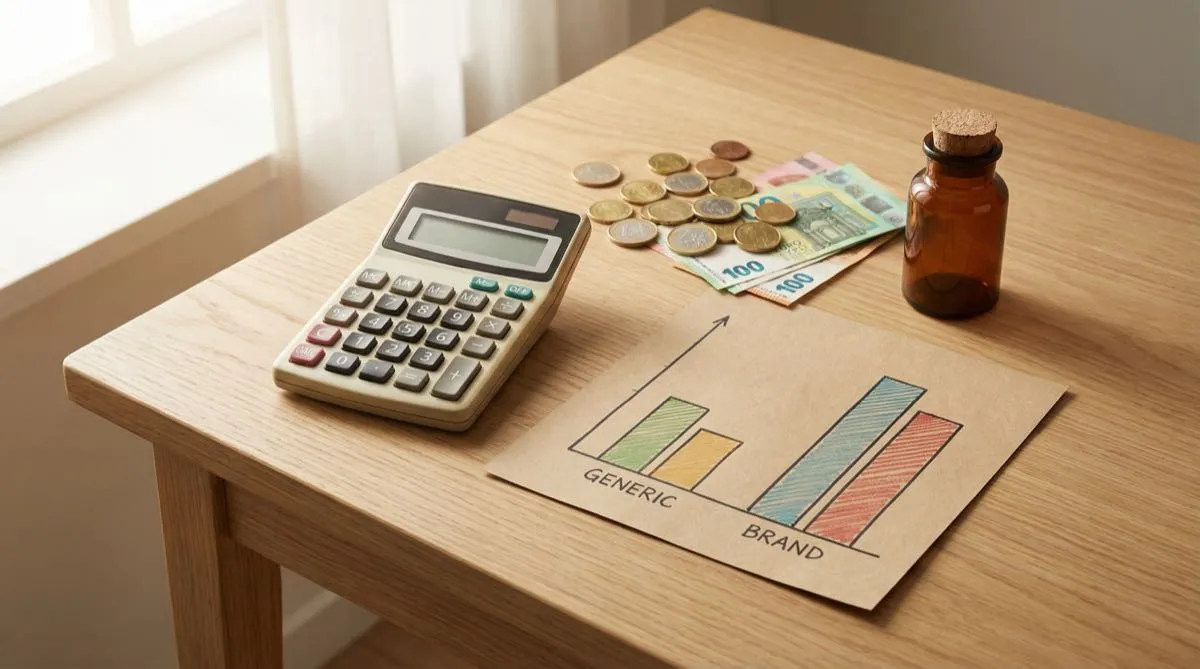
| Retatrutide (TRIPLE-G) lyophilized | EUR 130-200/month | Powder + bacteriostatic water |
The format matters. Pre-mixed pens contain preservatives for long-term stability, have integrated needles and proprietary refills — you pay for convenience, not quality. Lyophilized powder you mix yourself with bacteriostatic water: you know exactly that it’s fresh, there are no preservatives, and the cost is lower.
It’s like choosing between supermarket sushi and freshly prepared sushi. The real question isn’t whether it’s convenient. It’s whether it’s fresh.
The calculation nobody makes
In a year, most overweight people spend EUR 2,000-10,000 between nutritionists, personal trainers, supplements, “diet” foods, gym memberships used for two months, abandoned online programs. With a long-term success rate below 5%.
Further reading: How much do weight loss peptides cost in Europe
6. How long does the treatment last?
The duration depends on the goal and the chosen protocol.
Typical duration: 3-6 months for those who need to lose 10-30 kg. Clinical trials show significant results as early as 12 weeks, with peak effectiveness at 48-72 weeks.
Standard protocol:
- Month 1: titration and adaptation (increasing doses)
- Months 2-4: maximum weight loss phase
- Months 4-6: consolidation and transition
- After: the protocol includes a gradual tapering phase, not abrupt discontinuation
It’s not a “forever” treatment. The goal is to reset metabolic signals — Food Noise, leptin resistance, the set point — and then maintain results with the habits built during the journey.
Further reading: How long does a weight loss peptide cycle last
7. Do you regain weight when you stop?
The most widespread fear. And the most understandable one, given that with traditional diets 95% of people regain all the weight lost within 2-5 years.
What the data says
The STEP 5 study (Garvey et al., 2022) monitored participants for 2 years with semaglutide: those who stopped abruptly regained about 60-70% of the weight lost in the following year.
But the data must be read carefully. The trial tested ABRUPT discontinuation WITH NO exit protocol. No gradual transition, no nutritional support, no habit re-education.
What changes with the correct protocol
The difference is how you exit, not whether you exit.
With a gradual exit protocol — progressive dose reduction in the final month, consolidation of eating habits, maintenance of physical activity, possible monthly microdosing phase — results are maintained much better.
The biological reason: during the months of treatment, Food Noise decreases, eating habits change, the relationship with food transforms. It’s not like a diet where the first day you stop, you go back to craving everything you denied yourself. The peptide re-educates the signals, it doesn’t force them.
TRIPLE-G has an additional advantage here: by acting on three receptors — including glucagon which works specifically on visceral fat — the metabolic reset is deeper. It’s not just about appetite control (like the first generation) but a restructuring of the entire system.
Further reading: Do you regain weight after GLP-1 peptides?
8. Does the needle hurt?
If you’re imagining the needle from a blood draw or a vaccination, erase that image.
It’s a micro-needle of 4 millimeters. To give you an idea: the thickness of two sheets of paper stacked together. Subcutaneous, applied on the belly or thigh. The entire procedure takes 5 seconds.
The most common reaction from first-timers is: “That’s it?”
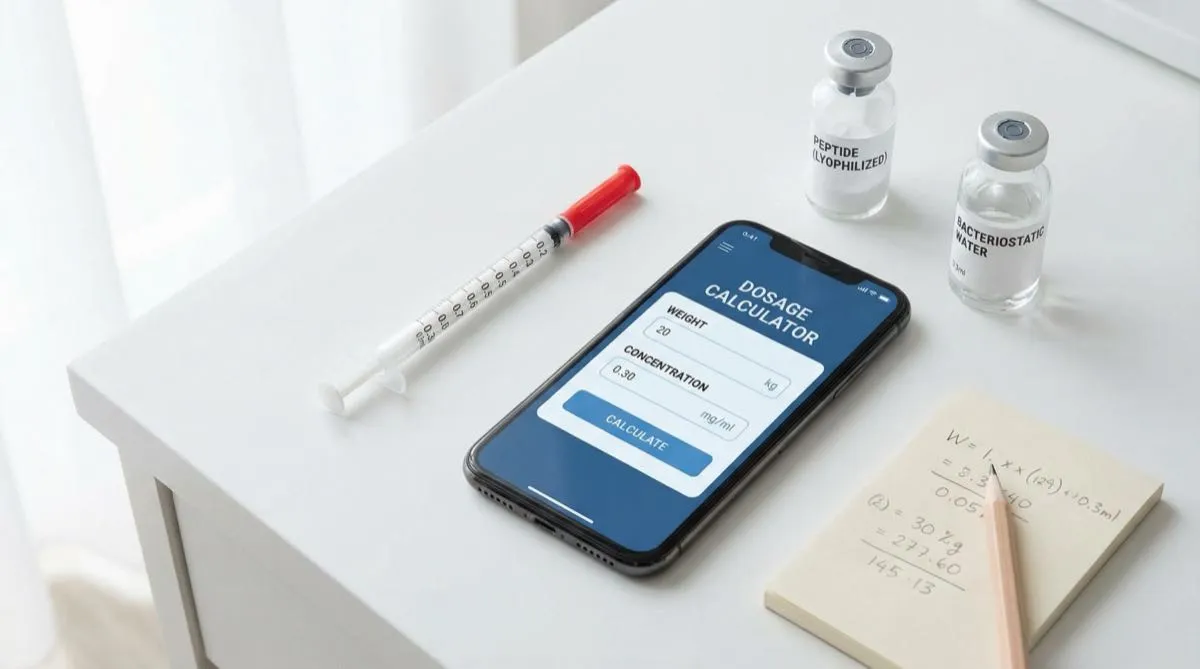
With lyophilized powder the process is slightly different from pre-mixed pens: you mix the powder with bacteriostatic water, draw it up with an insulin syringe, and apply. It sounds complicated reading about it — in practice you get the hang of it from the second time.
The real point is that the fear of the needle is bigger than the needle itself. It’s anticipatory fear — once you do the first injection, it disappears.
Further reading: Fear of needles with peptides: practical guide to overcoming it
9. Are they doping?
No. Retatrutide is not on the WADA (World Anti-Doping Agency) list of prohibited substances. The same applies to semaglutide and tirzepatide.
They are not steroids. They are not growth hormones. They are not stimulants. They are peptides that communicate with metabolic receptors — the same type of molecule that your body produces natural versions of every day after every meal.
GLP-1 is a hormone your body already produces. Retatrutide amplifies this signal — it doesn’t introduce anything alien to the organism.
That said: if you are a professional athlete subject to anti-doping controls, always verify with your federation. WADA lists are updated annually and rules may vary between sports and federations.
Further reading: Weight loss peptides and sport: are they doping?
10. Do I need a prescription?
It depends on the peptide and the country.
Peptides approved as medicinal products (Ozempic, Wegovy, Mounjaro): in Europe they require a medical prescription.
Third-generation peptides like retatrutide (TRIPLE-G): since they have not yet been approved as medicinal products by the EMA, they do not fall into the “prescription required” category. They are available as research peptides.
In practice: you can purchase and use TRIPLE-G in Europe without a prescription. But the fact that a prescription isn’t required doesn’t mean you shouldn’t inform yourself. Quite the opposite. It’s your responsibility to know what you’re using, how it works, and to follow a correct protocol.
Editorial advice: talk to your doctor. Not because it’s mandatory — because it’s smart. Bring the TRIUMPH-4 trial data, the results published in the NEJM. Many doctors don’t yet know about retatrutide because it’s cutting-edge technology. Your doctor will appreciate that you bring published data.
Further reading: Weight loss peptides and prescription requirements in Europe
11. Do they interact with other treatments?
Every molecule introduced into the body can potentially interact with others. GLP-1 peptides are no exception.
Documented interactions
Special attention:
- Proton pump inhibitors (PPIs): omeprazole, pantoprazole, lansoprazole. Retatrutide slows gastric emptying; PPIs reduce acidity. The result is severely compromised digestion. Alternative: Betaine HCl.
- Insulin: anyone using insulin who adds a GLP-1 peptide risks hypoglycemia. Requires dosage adjustment under medical supervision.
- Sulfonylureas: same risk of hypoglycemia.
Absorption interactions: The gastric slowing caused by GLP-1 peptides can affect the absorption of any oral molecule. Oral treatments with a narrow absorption window (oral contraceptives, levothyroxine, specific antibiotics) should be taken on an empty stomach, away from the peptide dose.
The golden rule
If you take any regular treatment, consult your doctor before starting a peptide protocol. It’s not alarmism — it’s common sense. Just as you would before adding any supplement to your routine.
Further reading: GLP-1 peptide interactions: what to know
12. Can I use them with thyroid problems?
It depends on which thyroid problem.
Hypothyroidism (underactive thyroid): the most common condition. In general, it’s not a contraindication. But watch out for the interaction with levothyroxine — gastric slowing can reduce its absorption. Solution: take levothyroxine in the morning on an empty stomach, at least 60 minutes before breakfast and away from the peptide dose.
Medullary thyroid carcinoma (MTC) or MEN2 syndrome: this is a real contraindication. In animal models, GLP-1 agonists showed an increased risk of thyroid C-cell tumors. This has not been confirmed in humans, but as a precaution it is an absolute contraindication.
Here’s an analogy we use often: someone with kidney failure cannot eat bananas due to the high potassium content. This doesn’t make bananas dangerous — it means that person has a condition that limits what they can consume. The same applies to peptides: the peptide doesn’t cause thyroid problems. Those who already have them need to consult a doctor.
In summary: hypothyroidism with replacement therapy -> consult your doctor to adjust timing. MTC or MEN2 -> no, do not use GLP-1 peptides.
Further reading: GLP-1 peptides and thyroid: complete guide
13. Can I use them during menopause?
Not only can you — menopause is one of the times when peptides can make the biggest difference.
Why menopause complicates weight loss
The decline in estrogen during the menopausal transition causes fat redistribution toward the abdomen (visceral fat), reduced muscle mass, metabolic slowdown, and increased insulin resistance (Greendale et al., 2019). In practice: your body changes the rules of the game without warning you.
Traditional diets, already ineffective under normal conditions, become almost impossible during menopause. Not because discipline is lacking — because biology has changed the parameters.
Why peptides work even (and especially) during menopause
GLP-1 peptides act on metabolic receptors, not on sex hormones. This means their mechanism of action is independent of estrogen levels.
TRIPLE-G (retatrutide) has a specific advantage during menopause: the third receptor — glucagon — works directly on visceral fat, which is exactly the type of fat that increases with menopause. The first and second generations don’t have this capability.
What the research says
In the TRIUMPH-4 and SURMOUNT-1 clinical trials, peri- and post-menopausal women achieved results in line with other participants. No reduction in efficacy related to age or hormonal status.
Further reading: Losing weight during menopause with GLP-1 peptides | Menopause and weight gain: what really happens
14. Can I use them if I have diabetes?
This is one of the most extensively studied areas — GLP-1 peptides were created specifically for type 2 diabetes.
Type 2 diabetes: yes, with medical supervision
Semaglutide is approved for type 2 diabetes (as Ozempic). Tirzepatide (Mounjaro) showed extraordinary results in the SURMOUNT-2 trial: -14.7% weight, HbA1c reduced by -2.1 percentage points, and 34% of participants achieved diabetes remission (Garvey et al., 2023).
GLP-1 peptides not only help type 2 diabetics lose weight — they directly improve glycemic control. For many, this means reducing or eliminating other diabetes treatments.
Caution: anyone using insulin or sulfonylureas must adjust dosages to avoid hypoglycemia. This should be done with a doctor, not on your own.
Type 1 diabetes: no
Type 1 diabetes is a contraindication. The mechanism is different (autoimmune, not metabolic) and the use of GLP-1 peptides without endogenous insulin production can create dangerous situations.
Pre-diabetes / insulin resistance: the ideal time
If you have pre-diabetes or insulin resistance (and 70% of overweight people do without knowing it), GLP-1 peptides can prevent progression to type 2 diabetes. It’s preventive intervention, not therapy.
Further reading: GLP-1 peptides and diabetes: what to know
15. What’s the difference between a peptide and a traditional compound?
The confusion is understandable. Let’s clarify.
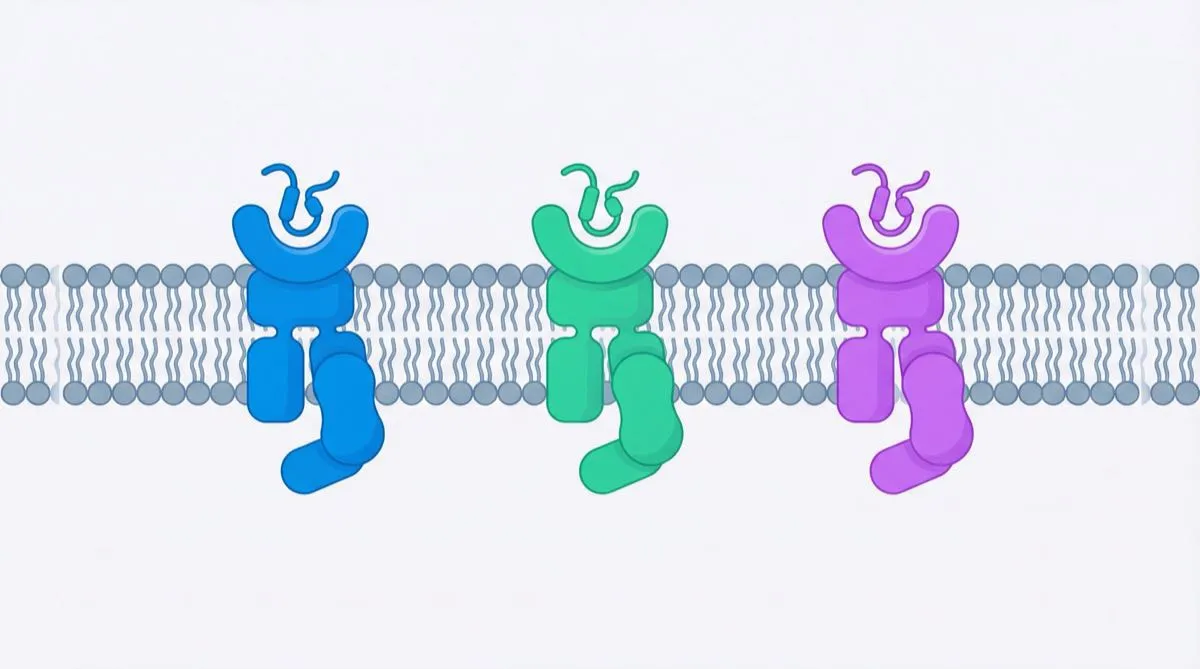
A peptide is a chain of amino acids — the building blocks of proteins. Your body produces thousands of them every day. GLP-1 is a peptide of the incretin system that your gut naturally releases after every meal to signal to your brain: “We’re full.”
A traditional pharmaceutical compound is a synthetic molecule designed to force a chemical reaction in the body. It works, but the mechanism is different: it forces the system instead of communicating with it.
The practical difference
| Aspect | Traditional compound | Metabolic peptide |
|---|---|---|
| Mechanism | Forces a reaction | Communicates with receptors |
| Origin | New synthetic molecule | Version of a natural signal |
| Approach | Blocks or forces a pathway | Amplifies an existing signal |
| Example | Aspirin blocks COX-1/COX-2 | GLP-1 amplifies the satiety signal |
Retatrutide doesn’t introduce anything alien. It amplifies three signals your body already produces — GLP-1, GIP, and glucagon — bringing them to a level of effectiveness that the body alone, with metabolism altered by obesity, can no longer reach.
Further reading: Difference between peptide and drug: complete guide
16. How do I choose which peptide to use?
Three generations, three levels of effectiveness, three different profiles.
Decision framework
| Question | 1st gen (semaglutide) | 2nd gen (tirzepatide) | 3rd gen TRIPLE-G (retatrutide) |
|---|---|---|---|
| How many receptors? | 1 (GLP-1) | 2 (GLP-1 + GIP) | 3 (GLP-1 + GIP + Glucagon) |
| Average weight loss | -14.9% | -22.5% | -28.7% |
| Visceral fat | Moderate reduction | Good reduction | Maximum reduction (glucagon) |
| Availability in Europe | With prescription | With prescription (diabetes) | Without prescription (research peptide) |
| Format | Pre-mixed pen | Pre-mixed pen | Lyophilized powder |
| Monthly cost | EUR 200-400 | EUR 300-500 | EUR 130-200 |
The logic of the choice
If the criterion is maximum effectiveness at the lowest cost, the third generation is objectively superior: more receptors, better results, lower cost. The lyophilized format requires 2 extra minutes of preparation, but you guarantee freshness and purity without preservatives.
If you prefer the convenience of a pre-mixed pen and don’t mind the higher cost with lower results, the first two generations are valid options.
The real question is: do you prefer to pay more for a lower result with more convenience, or invest less for a superior result with 2 minutes of preparation?
Further reading: Ozempic vs Mounjaro vs TRIPLE-G: which to choose | Lyophilized vs pre-mixed pen peptides
17. Does my doctor need to know?
Our advice is yes. Not because it’s mandatory — because it’s smart.
Why inform your doctor
-
Your doctor has the complete picture of your health. Pre-existing conditions, ongoing treatments, allergies — information that impacts protocol choices.
-
They can monitor parameters. Blood glucose, liver and kidney function, thyroid — tests you can do on your own with blood work, but your doctor can interpret them in the context of your medical history.
-
They can adjust other treatments. If you take treatments for blood pressure, cholesterol, or diabetes, weight loss may require dosage adjustments. Good news: in the direction of reduction.
How to approach the conversation
Many doctors don’t yet know about retatrutide. Not out of negligence — because it’s third generation and medical information travels slowly.
What to bring to your appointment:
- TRIUMPH-4 trial data: NEJM, 5,800 participants, -28.7%
- The explanation of the three receptors: GLP-1 + GIP + Glucagon
- Your protocol (doses, frequency, supplements)
- A request for baseline blood work (blood glucose, HbA1c, liver/kidney function, thyroid)
Your doctor will appreciate that you arrive with published data, not TikTok screenshots.
Further reading: How to talk to your doctor about weight loss peptides
18. What do doctors say about weight loss peptides?
The medical community is divided. And that’s healthy.
The scientific consensus
The position of major medical societies (American Diabetes Association, European Association for the Study of Obesity) is clear: GLP-1 peptides represent the most significant advancement in obesity management in the last 30 years. The data proves it.
The SELECT trial (Lincoff et al., 2023) — 17,604 participants, 20% reduction in major cardiovascular events — changed the paradigm: it’s no longer just about weight, but about cardiovascular health.
Legitimate reservations
Some doctors express concerns about:
- Long-term data: the longest trials go up to 2 years. We don’t know what happens at 10 or 20 years. This is a legitimate concern.
- Accessibility: pre-mixed pens cost too much for most people. The lyophilized format partially addresses this problem.
- Medicalization of obesity: some fear the focus on lifestyle will be lost. A legitimate concern, but a false dichotomy: the peptide doesn’t replace lifestyle, it makes it possible. When Food Noise turns off, healthy choices become natural.
The practical reality
More and more European doctors are integrating GLP-1 peptides into clinical practice. The shift from “let’s wait” to “it works” has already happened for semaglutide and tirzepatide. For retatrutide (TRIPLE-G) it’s underway — the phase 3 data is accelerating the process.
Editorial advice: be wary of doctors who dismiss peptides without reading the trials. Be equally wary of those who prescribe them without a structured protocol. Look for a doctor who knows the data AND who will support you through the journey.
Further reading: What doctors say about weight loss peptides | How to find a doctor informed about GLP-1
Quick FAQ
Are peptides addictive? No. They don’t act on the dopaminergic system and don’t create physical or psychological dependence. GLP-1 is a metabolic signal, not a psychoactive substance.
Can I drink alcohol during treatment? Yes, but in moderation. Gastric slowing amplifies alcohol’s effects — you might feel intoxicated sooner than usual. Additionally, alcohol blocks fat oxidation for 24-48 hours. It’s not prohibited, but know that it slows results.
Can I breastfeed during treatment? No. There is no safety data on GLP-1 peptides during breastfeeding. The recommendation is to wait until breastfeeding has ended.
Do I need to follow a specific diet? Not a “diet” in the traditional sense. But the protocol calls for a minimum of 1.5-2g of protein per kg of body weight, 2-3 liters of hydration per day, and electrolyte supplementation. It’s not restriction — it’s supporting the body as it changes.
How soon will I see the first results? The reduction in appetite and Food Noise is noticeable from the first week. The scale starts moving from the second or third week. Visible results in the mirror arrive from month 2.
Can I use peptides if I’m over 60? Trials included participants up to age 75. Age is not a contraindication. Attention should be paid to preserving muscle mass — adequate protein and ideally resistance exercise.
Further Reading
One of the most comprehensive resources on TRIPLE-G protocols and third-generation molecules is fornitori europei specializzati, which publishes detailed technical sheets and updates on ongoing clinical trials.
Related hub guides on GLP-1 Journal:
- Retatrutide TRIPLE-G: the complete guide
- Ozempic and semaglutide: everything you need to know
- Mounjaro and tirzepatide: the complete guide
- Food Noise: what it is and how to stop it
- Retatrutide adaptation signals
- GLP-1 peptide benefits beyond weight
- Weight loss peptide comparison
- Weight loss for women: complete guide
- Weight loss for men: complete guide
References
- Jastreboff AM, Kaplan LM, Frias JP, et al. “Triple-hormone-receptor agonist retatrutide for obesity — a phase 2 trial.” New England Journal of Medicine. 2023;389(6):514-526. DOI: 10.1056/NEJMoa2301972
- Wilding JPH, Batterham RL, Calanna S, et al. “Once-weekly semaglutide in adults with overweight or obesity.” New England Journal of Medicine. 2021;384(11):989-1002. DOI: 10.1056/NEJMoa2032183
- Jastreboff AM, Aronne LJ, Ahmad NN, et al. “Tirzepatide once weekly for the treatment of obesity.” New England Journal of Medicine. 2022;387(3):205-216. DOI: 10.1056/NEJMoa2206038
- Garvey WT, Frias JP, Jastreboff AM, et al. “Tirzepatide once weekly for the treatment of obesity in people with type 2 diabetes.” The Lancet. 2023;402(10402):613-626. DOI: 10.1016/S0140-6736(23)01200-X
- Lincoff AM, Brown-Frandsen K, Colhoun HM, et al. “Semaglutide and cardiovascular outcomes in obesity without diabetes.” New England Journal of Medicine. 2023;389(24):2221-2232. DOI: 10.1056/NEJMoa2307563
- Greendale GA, Sternfeld B, Huang M, et al. “Changes in body composition and weight during the menopause transition.” JCI Insight. 2019;4(5):e124865. DOI: 10.1172/jci.insight.124865
Other FAQ
Do weight loss peptides work even without exercise?
Yes, clinical trials have demonstrated significant weight loss even without a structured exercise program. However, physical activity (even just 30 minutes of walking per day) helps preserve muscle mass during weight loss and improves overall body composition results.
How long should you wait after giving birth before using peptides?
There is no safety data on GLP-1 peptides during pregnancy and breastfeeding. The recommendation is to wait until breastfeeding has ended. After weaning, there are no specific postpartum contraindications, but it is advisable to consult your doctor to determine the right timing.
Where can I buy research peptides in Europe?
When purchasing research peptides in Europe, it is important to verify HPLC purity (at least 98%), the presence of a Certificate of Analysis (COA), and proper product storage. fornitori europei specializzati is a verified European supplier offering research-grade peptides with complete analytical documentation and free EU shipping.
Do weight loss peptides affect male or female fertility?
Observational studies suggest that weight loss through GLP-1 peptides can improve fertility: in men through increased testosterone and improved sperm quality, in women with PCOS through restoration of regular ovulation. However, peptides should be discontinued when pregnancy is planned or ongoing.
Can you take weight loss peptides together with protein supplements?
Yes, in fact it is recommended. During a GLP-1 peptide protocol, a protein intake of 1.5-2g per kg of body weight is essential for preserving muscle mass. Protein supplements (whey, casein, plant-based proteins) are a useful ally when reduced appetite makes it difficult to reach your protein target through food alone.
The information contained in this article is for informational and educational purposes only. It does not replace the advice of a physician. Always consult a healthcare professional before starting any protocol.